
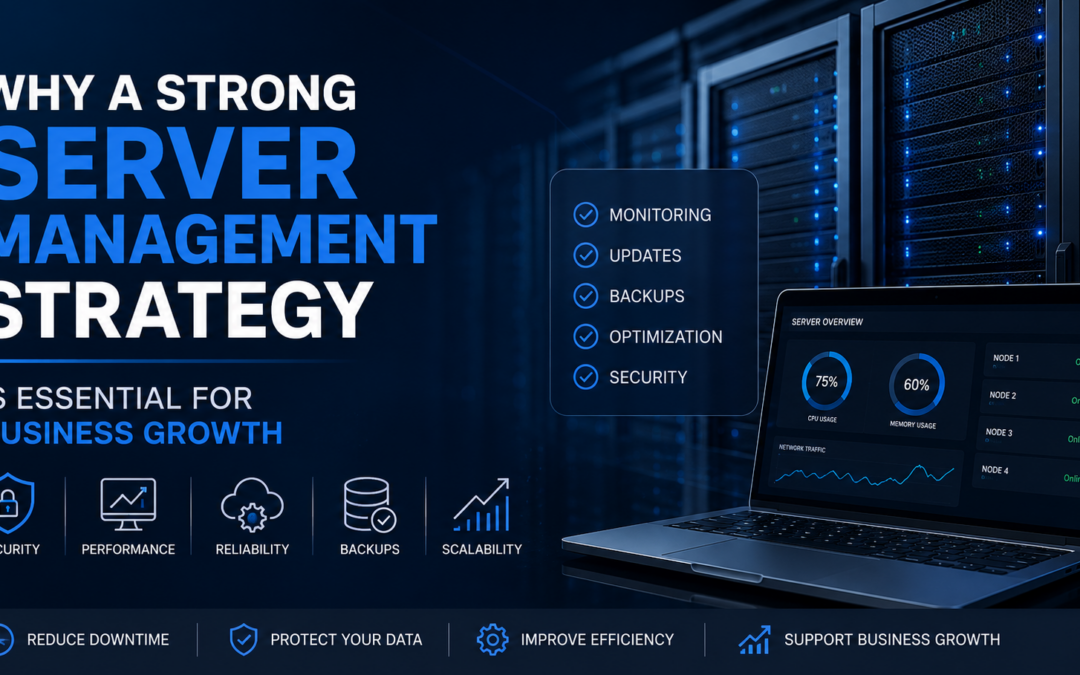
As businesses scale, their IT infrastructure becomes increasingly complex. What begins as a single application hosted on a VPS can quickly expand into multiple virtual machines, production clusters, cloud environments, and mission-critical services.
Without a structured server management strategy, this growth often introduces performance bottlenecks, security vulnerabilities, configuration drift, and costly downtime.
Modern infrastructure management isn’t just about keeping servers online—it’s about building a stable, secure, and scalable environment that supports long-term business success.
Build Stability Before You Scale
Many infrastructure problems don’t appear overnight. They develop gradually due to outdated packages, inconsistent configurations, missing backups, or neglected monitoring.
A proactive management strategy should include:
- Continuous system monitoring
- Security updates and patch management
- Backup verification
- Performance optimization
- Capacity planning
- Documentation and change management
Organizations that invest in these practices reduce operational risks while improving service availability and user experience.
Infrastructure Upgrades Require Planning
One of the most common mistakes administrators make is treating major platform upgrades as routine updates.
Virtualization platforms such as Proxmox VE require careful preparation before moving between major versions. Repository changes, package dependencies, cluster validation, and rollback planning all play an important role in a successful upgrade.
For administrators planning a production migration, this detailed Proxmox VE Cluster Upgrade Guide provides a structured walkthrough for upgrading from version 7.4.x to 9.x while minimizing risk.
Networking Is Just As Important As Compute
Reliable virtualization depends on more than CPU and storage resources.
Network configuration directly impacts cluster communication, live migration, storage replication, and overall service availability.
Understanding common networking challenges and deployment best practices helps administrators build more resilient Proxmox environments.
This guide explains practical networking considerations that every Proxmox administrator should understand.
Security Should Be Part of Every Infrastructure Strategy
Performance and scalability mean little without security.
Modern Linux servers should be continuously hardened through proper service configuration, access control, firewall management, regular patching, and proactive monitoring.
Security is not a one-time setup—it is an ongoing operational process that evolves alongside your infrastructure.
Organizations looking to strengthen their Linux administration skills can benefit from the growing collection of practical tutorials and real-world infrastructure guides available on Servarat Blog
Final Thoughts
Infrastructure is the foundation of every modern digital business.
Whether you’re operating a single virtual server or managing a large virtualization cluster, investing in proactive server management, documented operational procedures, and continuous optimization will significantly improve reliability, security, and long-term scalability.
The most successful infrastructure teams aren’t simply reacting to problems—they’re preventing them before they impact production.